When you find mold, start by checking what the food is. The answer for a whole block of cheese can be different from the answer for sliced cheese.
Identify the food before considering an exception
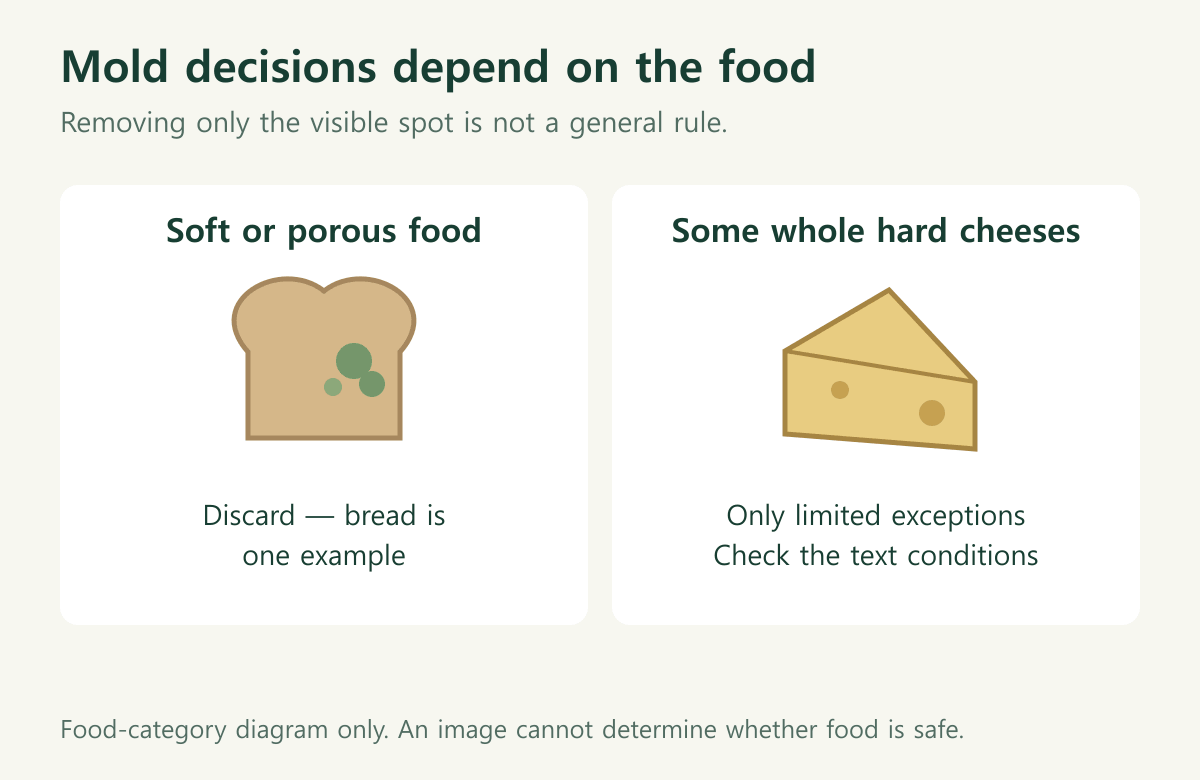
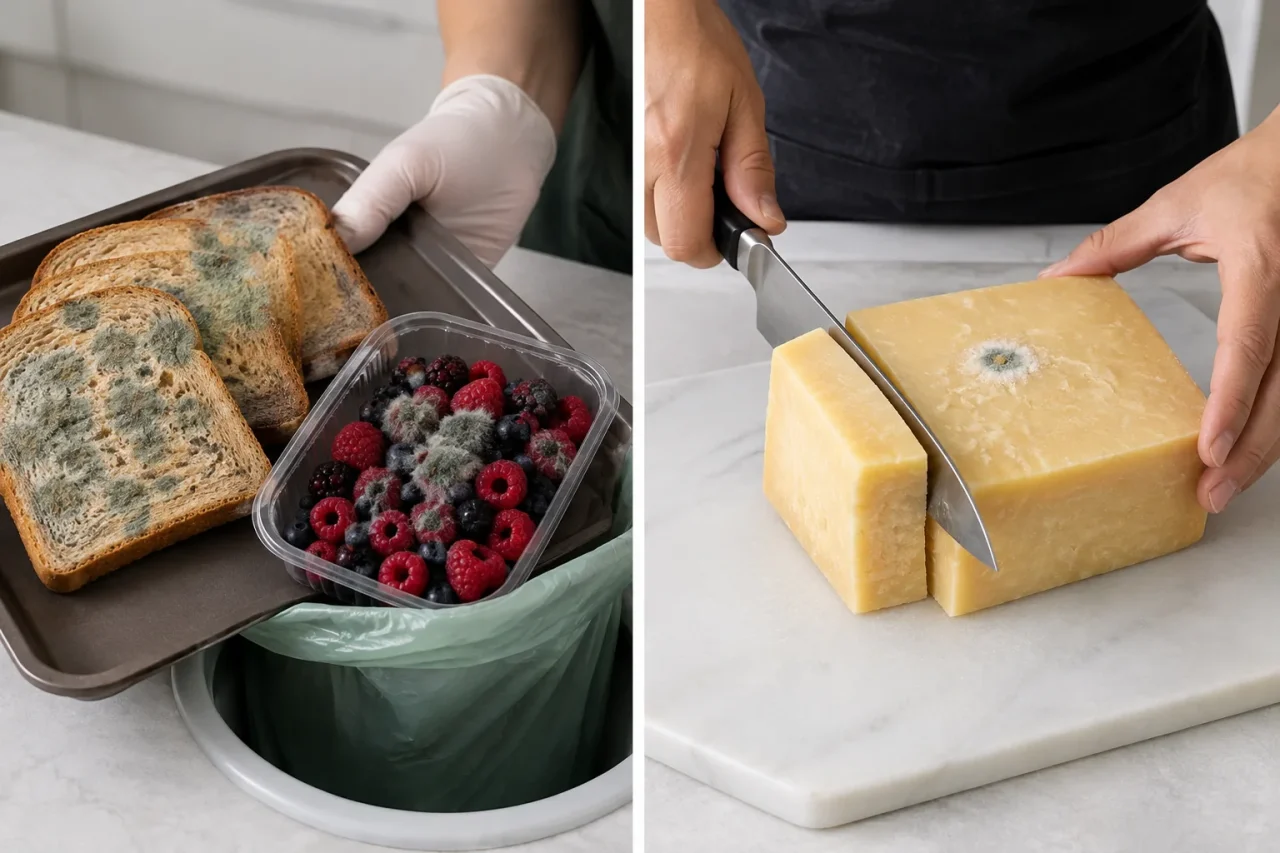
Discard moldy bread, jam, yogurt, soft or sliced cheese, cooked foods, and soft produce. Contamination can extend below the surface; do not sniff closely. USDA table
Trimming is a limited exception
For small mold spots on solid hard cheese or firm, low-moisture vegetables, cut away at least 1 inch (2.54cm) around and below. Keep the knife away from the mold itself, and rewrap the cheese. Do not use this exception if the mold is extensive or there is not enough room to trim the required area. USDA conditions
Three questions to answer in your kitchen
| Question | Check |
|---|---|
| What exactly is the food? | Package name and whole, sliced, or processed form |
| Does it match the exception? | The specific type of food, not just whether it looks firm |
| Can you follow all the trimming conditions? | Do not use scraping or reheating in place of the stated method |
For example, a thin slice in the fridge does not qualify just because it came from hard cheese. If the package is missing and you cannot identify the food, do not guess. These checks cannot identify the mold species or test for toxins at home.
After discarding
Clean the place where the food was stored, and check any food it touched. USDA
Before shopping again, note how much you usually use and how much is left. If half a container repeatedly remains, plan a second dish or consider a smaller pack. If you are unsure about a dry patch on frozen food, check what the food is and how it was stored. A photograph alone cannot tell you whether it is safe.