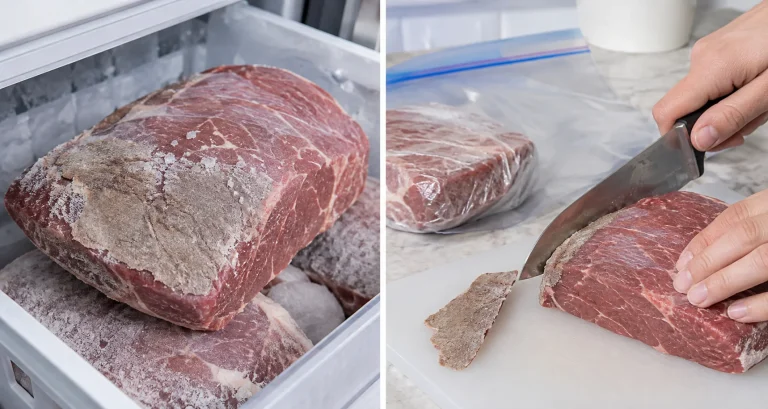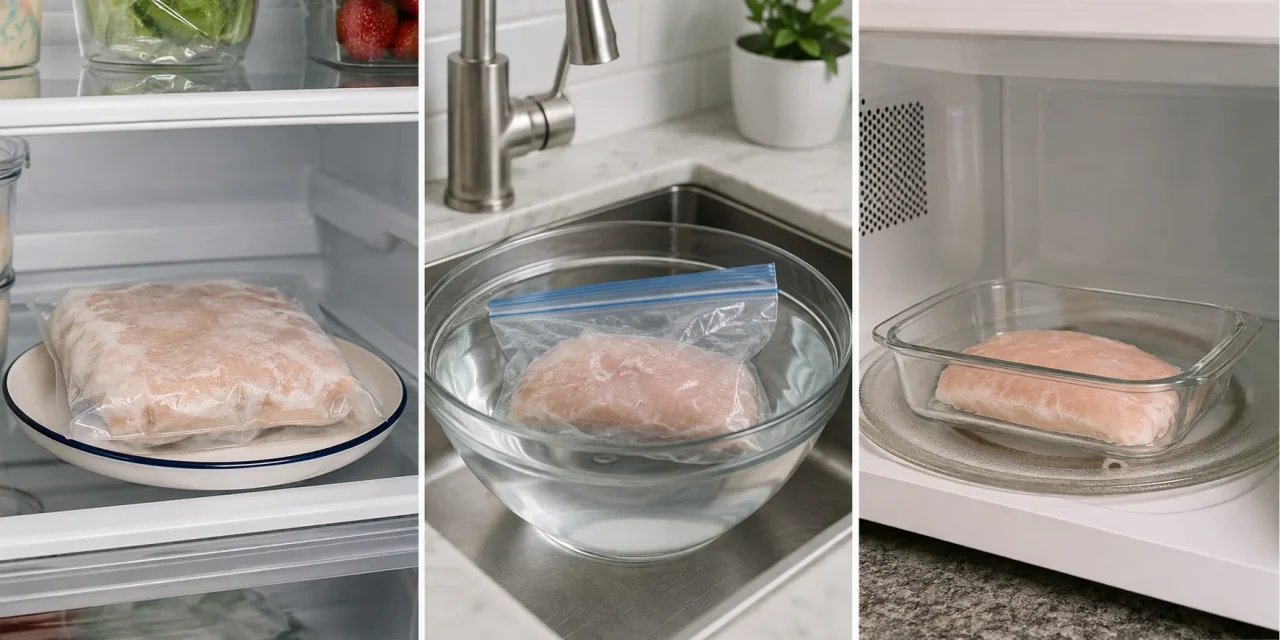
When dinner is approaching and food is still frozen, the counter looks tempting. Before choosing a thawing method, check how much time you have and whether you can cook as soon as the food thaws.
Three thawing methods and when to cook
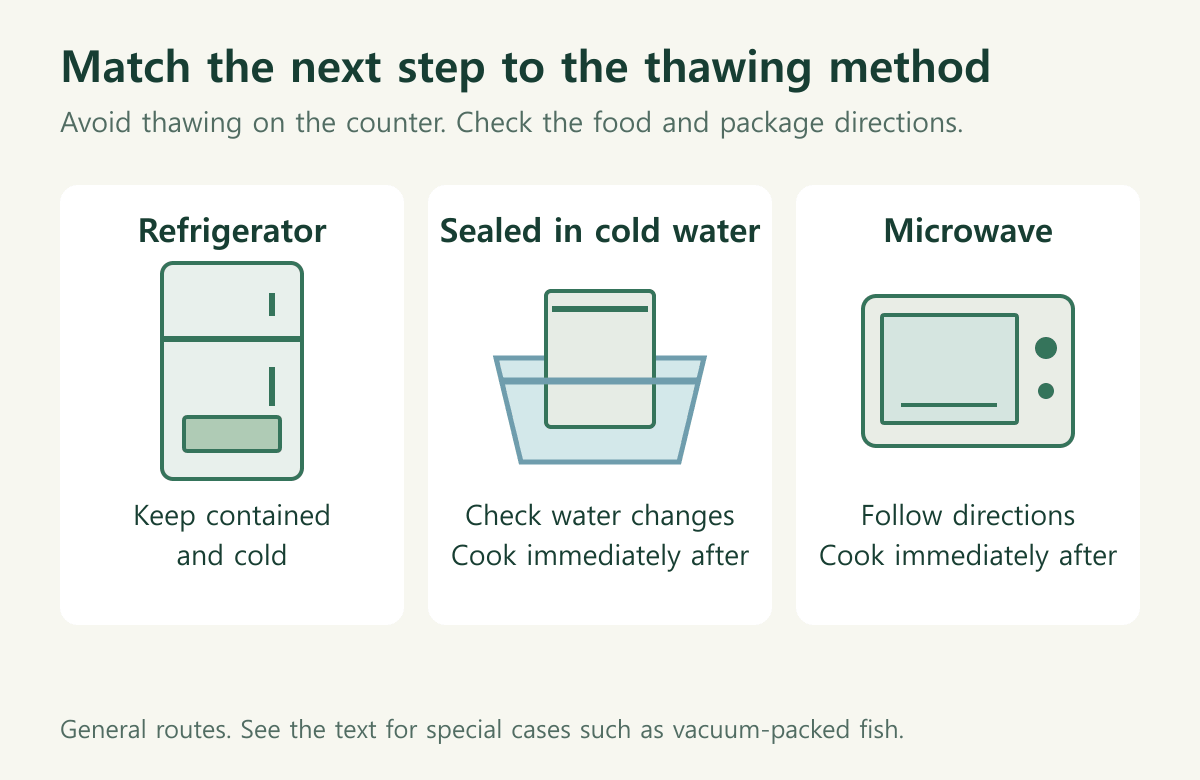
| Method | Conditions | Next step |
|---|---|---|
| Refrigerator | USDA: 40°F (4°C) or below; catch any leaks | Cook within the refrigerated storage time for that food |
| Cold water | Leak-proof bag; submerge in cold water; replace water every 30 minutes | Cook immediately |
| Microwave | Follow the food and microwave defrost instructions | Cook immediately |
Do not use a method prohibited by the label. Read the vacuum-packed fish exception below before using the table.
Set aside space for a tray and decide when you will cook. A faster thawing method will not help if you need to leave as soon as the food thaws. Thawing time varies with thickness, quantity, and equipment.
Vacuum-packed fish needs an extra packaging check
Look for instructions to remove packaging before thawing or keep frozen until use. Wisconsin’s guidance for food establishments says to remove such fish entirely from the vacuum package before thawing. If the package tells you to remove it before thawing, follow that instruction at home too. Do not thaw the fish inside the original sealed bag. The Wisconsin guidance is for US food businesses; it does not describe Korean household law. Wisconsin vacuum-packed fish guidance
Does refrigerator thawing always allow refreezing?
USDA guidance allows food thawed properly in the refrigerator to be refrozen without cooking, though quality may decline. Food thawed in cold water or a microwave needs to be cooked before refreezing. USDA refreezing conditions
Korean MFDS meat guidance instead advises against refreezing after thawing. These sources give different advice, so neither should be read as permission to refreeze every food. Follow the product’s no-refreezing instructions and applicable local guidance; thaw the amount you need. MFDS refreezing precaution
Thawed food still has a limited storage time in the fridge. FoodSafety.gov lists one to two days for raw poultry and ground meat at 40°F (4°C) or below. This is not the limit for every thawed food. Food-specific refrigerated storage chart
Make a quick note for the next meal
- Food name and original package instructions
- Thawing start date, time, and method
- Unusual events such as leaks or temperature problems
- Planned cooking time and refreezing instructions
These notes help you remember what happened, but they cannot prove that food is safe. Refreezing does not make food safe when you do not know how it was stored. For poultry preparation, also see Should You Wash Raw Chicken?.