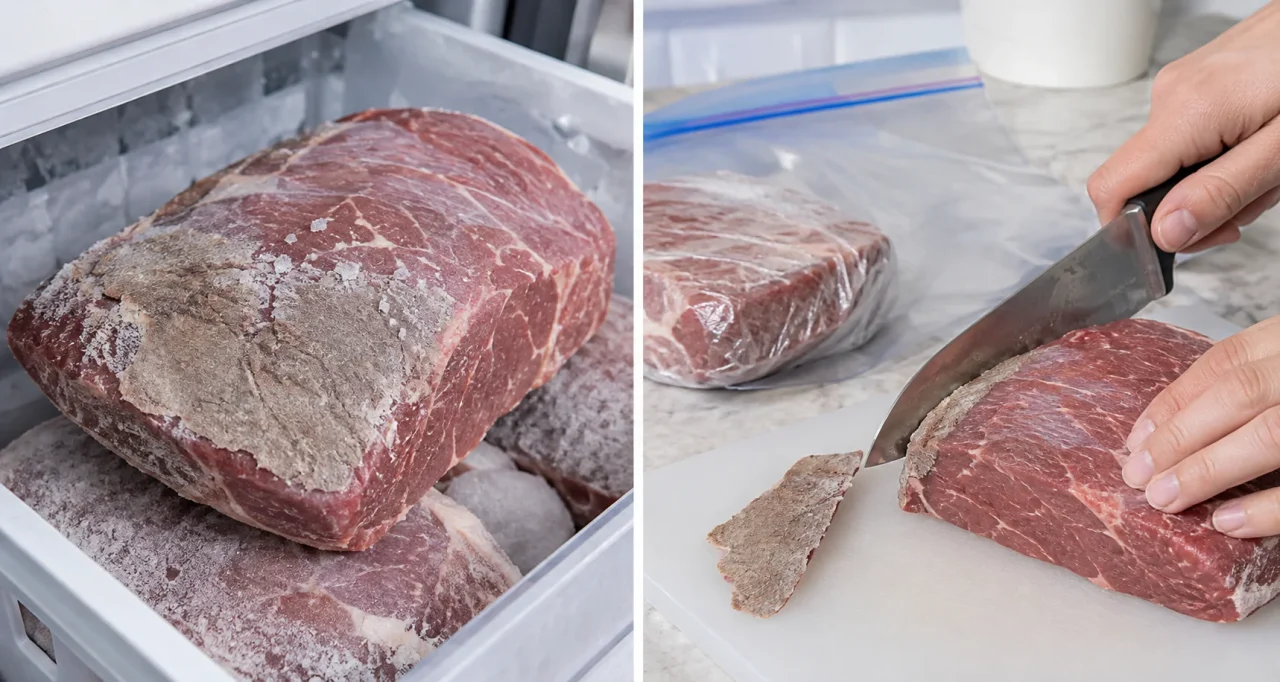
A dry patch on frozen food can leave you wondering whether it will still taste good and whether it is safe. Those are two different questions.
Check appearance and storage history separately
| Question | Information to record | What this cannot tell you on its own |
|---|---|---|
| When and how was it stored? | Package date, freezer temperature, outages or open-door events | Food being frozen now does not tell you how it was handled before. |
| Where are the changes, and how widespread are they? | A small dry area or widespread changes | A photograph does not test for microorganisms or toxins. |
| What is the original product? | Identity and cooking or thawing directions | Similar-looking foods may need different handling. |
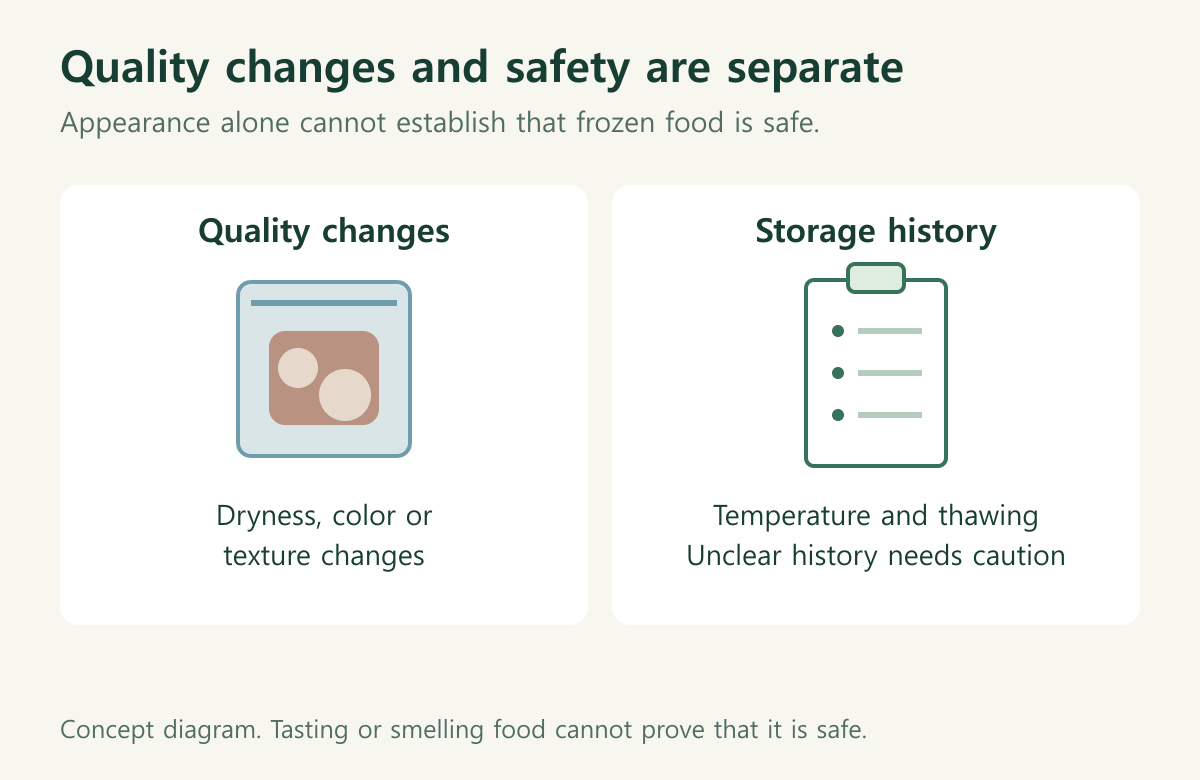
Food can be unsafe even with normal appearance and odor. A normal smell does not mean food is safe after a temperature problem. FDA on storage and appearance
Check what happened during a power outage or thaw
After an outage, FDA allows refreezing or cooking food that still has ice crystals or is 40°F (4°C) or below. Discard perishables held at room temperature for two hours or more, or one hour above 90°F. Calling a dry patch freezer burn does not tell you how long the food was warm or what temperature it reached. FDA outage guidance
If the door was left ajar overnight, record when you discovered it and what you measured, instead of only noting that it froze again. If you do not know a time or temperature, say so in your notes. Refreezing the food or covering an odor with seasoning cannot fill in those gaps.
Decide on quality after checking safe handling
Freezer-burned areas can be trimmed before or after cooking; if much of the food has dried out, you may prefer to discard it because of its quality. Freezing does not kill all microorganisms, so safe thawing and cooking remain necessary. USDA
Consider whether enough remains for the planned dish and whether its texture matters. A dish with more moisture may suit the texture, but it cannot make questionable food safe.
For next time, choose practical portions and close freezer packaging securely to limit air exposure. USDA
Keep the food name, date, and original cooking instructions with the package. Use the separate guides to safe thawing and moldy food if those are the questions you need to answer.