Canned beans are convenient, but what to do with the liquid is not always obvious. Some recipes ask you to rinse the beans; others use the liquid in a soup.
Draining and rinsing are different steps
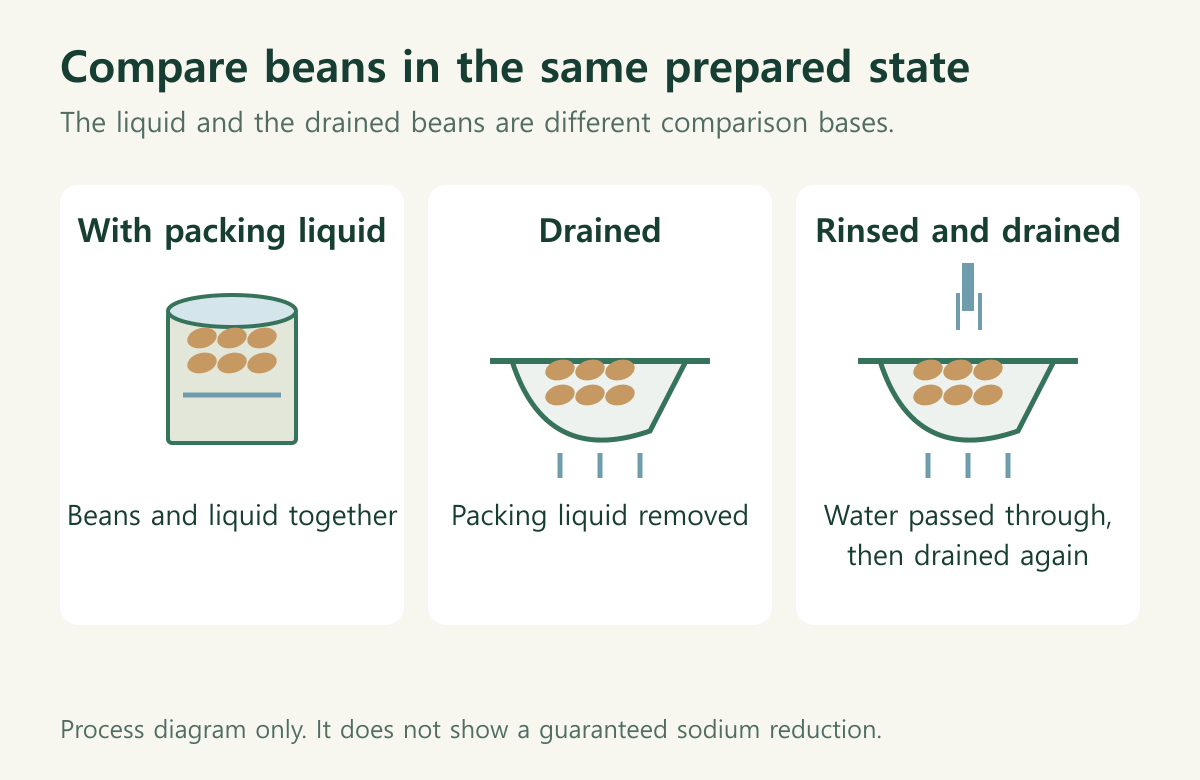
Draining removes the packing liquid. Rinsing means running water through the drained beans, then draining them again. Check which stage your recipe refers to when it gives a weight or volume.
Duyff and colleagues’ 2011 study found average sodium reductions of 36% after draining and 41% after rinsing and draining, compared with beans plus liquid, across five bean varieties. The researchers rinsed the beans with 3.5L of water at approximately 22°C over about 10 seconds, draining for two minutes before and after. The difference between draining alone and rinsing followed by draining was not statistically significant (p>0.05). Study methods and results
Decide how you will use the beans before calculating sodium
- Clean the lid before opening. FDA guidance for canned food
- Check whether the recipe uses drained beans or also needs the packing liquid.
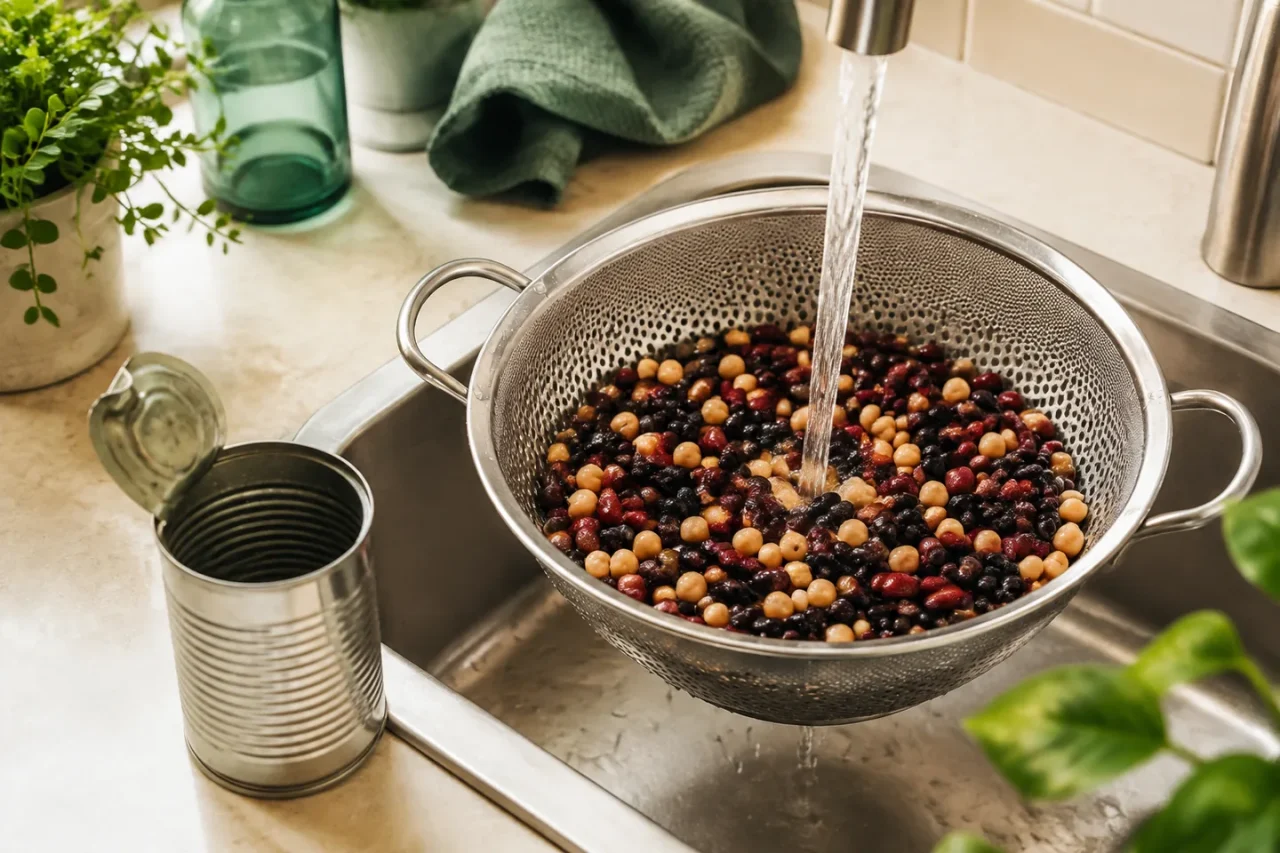
- For rinsed beans, drain in a colander, rinse evenly under clean running water, then drain again.
- Measure the beans after the preparation step your recipe specifies, then set aside what you will use today.
You do not need to use the study’s volume of water at home. For no-salt-added beans, check the nutrition label; the wording on the front does not mean the sodium content is zero. If the manufacturer has not measured the sodium in drained or rinsed beans, do not fill in a value yourself.
Compare labels using the same basis
This is a fictional label example, not a product comparison or rinsing experiment. For this example, assume both labels refer to beans prepared in the same way.
| Example product | Label | Calculation per 100g |
|---|---|---|
| A | 240mg per 120g | 240 ÷ 120 × 100 = 200mg |
| B | 160mg per 100g | 160mg |
B has the lower stated value in this example. This does not compare rinsed A with rinsed B. If one label includes liquid and the other describes drained solids, ask the manufacturer about the basis before comparing. Do not deduct an unverified reduction from a medically prescribed sodium allowance.
The study did not measure changes in other water-soluble nutrients. It therefore cannot tell us that every other nutrient stays unchanged. Study limitations
Count leftover storage time from when you opened the can
USDA lists three to four refrigerated days for opened low-acid canned foods such as beans. Refrigerate promptly in a clean container and follow the package instructions if they give a shorter storage time. Rinsing does not restart that storage period. USDA opened-food storage chart
Record the opening date, remaining amount, and planned next dish together. Rinsing cannot make the beans safe if you are unsure how they were stored. For a meal idea, see the 15-Minute Chickpea Veggie Bowl.