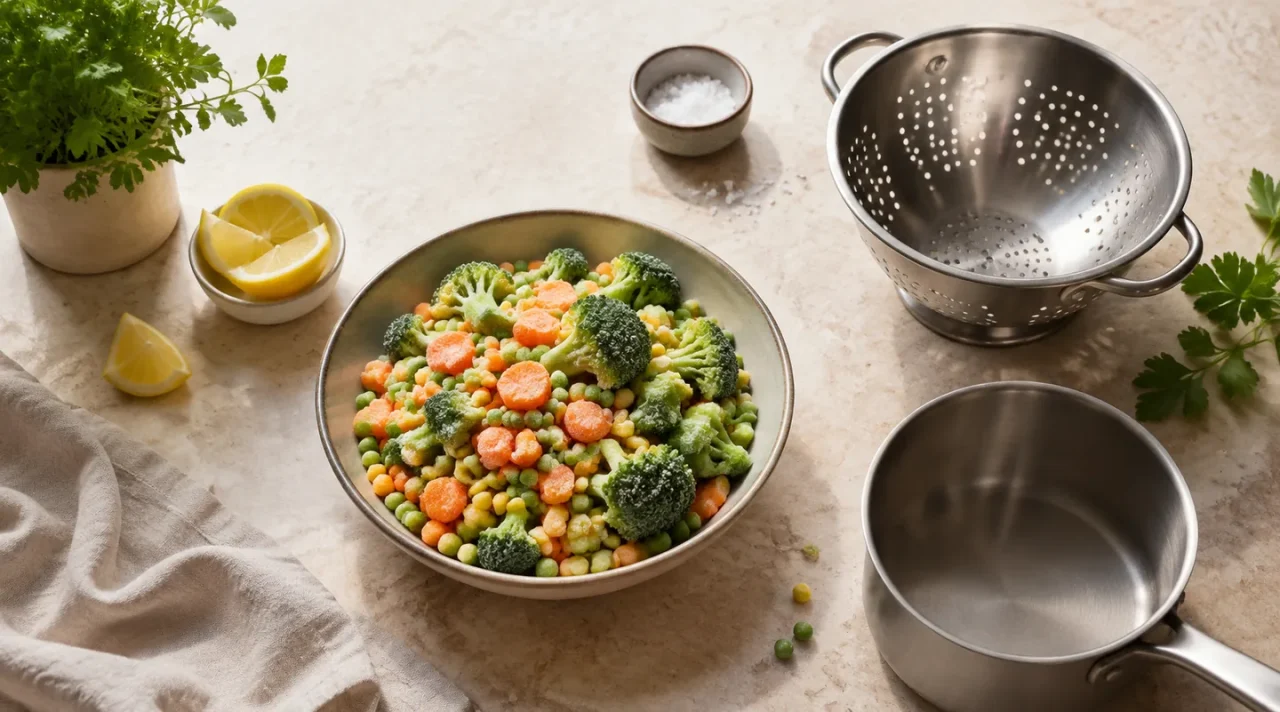
Opening a bag of frozen vegetables can prompt a moment of hesitation. They look ready to use, but should they go straight into the pan or be rinsed first?
Copy three details from the package
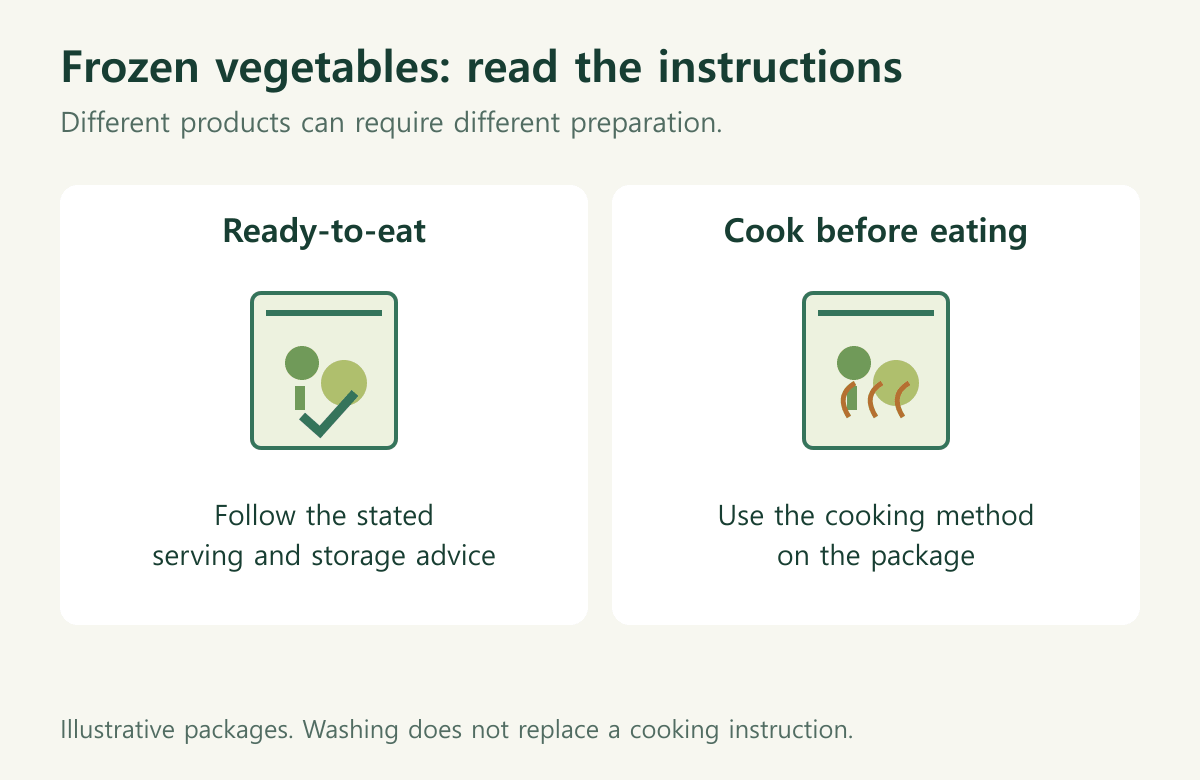
Use the table below to check your package. The examples show what to look for; your product’s own instructions still apply.
| Detail | Wording on your package | If it is missing |
|---|---|---|
| Intended use | Ready to eat / cook before eating / other | Ask the manufacturer; do not guess from the product name. |
| Preparation | Washing and thawing instructions | Do not substitute another product’s directions. |
| Your appliance | Pan, pot, or microwave instructions | Ask for a method suitable for your equipment. |
“Cook from frozen” and “thaw before cooking” are different instructions. Peas in a sauce may also need different preparation from plain peas. Keep the preparation and cooking instructions together when deciding how to use the bag.
Blanched does not necessarily mean ready to eat
Blanching is a brief heat treatment used before freezing to help preserve quality. The National Center for Home Food Preservation explains its role in limiting changes in flavor, color, and texture. Knowing that vegetables were blanched does not tell you whether you can eat the finished product without cooking. Check its cooking directions.
Microorganisms in frozen food can grow after thawing. Remove only the portion needed and keep the rest frozen. Rinsing does not sterilize the vegetables or replace any cooking the package requires. EFSA guidance on safe defrosting
Plan the cooling step before making a cold dish
Check the worksheet’s first row before making a smoothie or salad. If the wording is missing or unreadable, do not assume you can eat the vegetables uncooked. Give the manufacturer the product name, country of sale, and batch number, and ask whether the product can be eaten without cooking.
Transfer cooked vegetables to clean containers and refrigerate promptly. FDA advises refrigeration within two hours after cooking, or one hour when the outdoor temperature is 90°F or hotter. FDA’s chilling guidance
Keep the directions when dividing a bag
If you label a smaller container only “vegetables,” useful details can get lost. Photograph the original back label, and note the product name and opening date so you can match each portion to its package. Keep the batch number for recall checks.
Moving food into your freezer does not reset the date on its package. Keep the original date and storage instructions in your notes; ask the manufacturer when the product or instructions are unclear. For meal planning, see How to Build a Balanced Weeknight Plate.