Start by noticing when you tend to forget to drink during the day. There is no single number of litres that suits everyone. If you have been told to limit fluids, follow that advice first.
1. Pair water with an existing habit
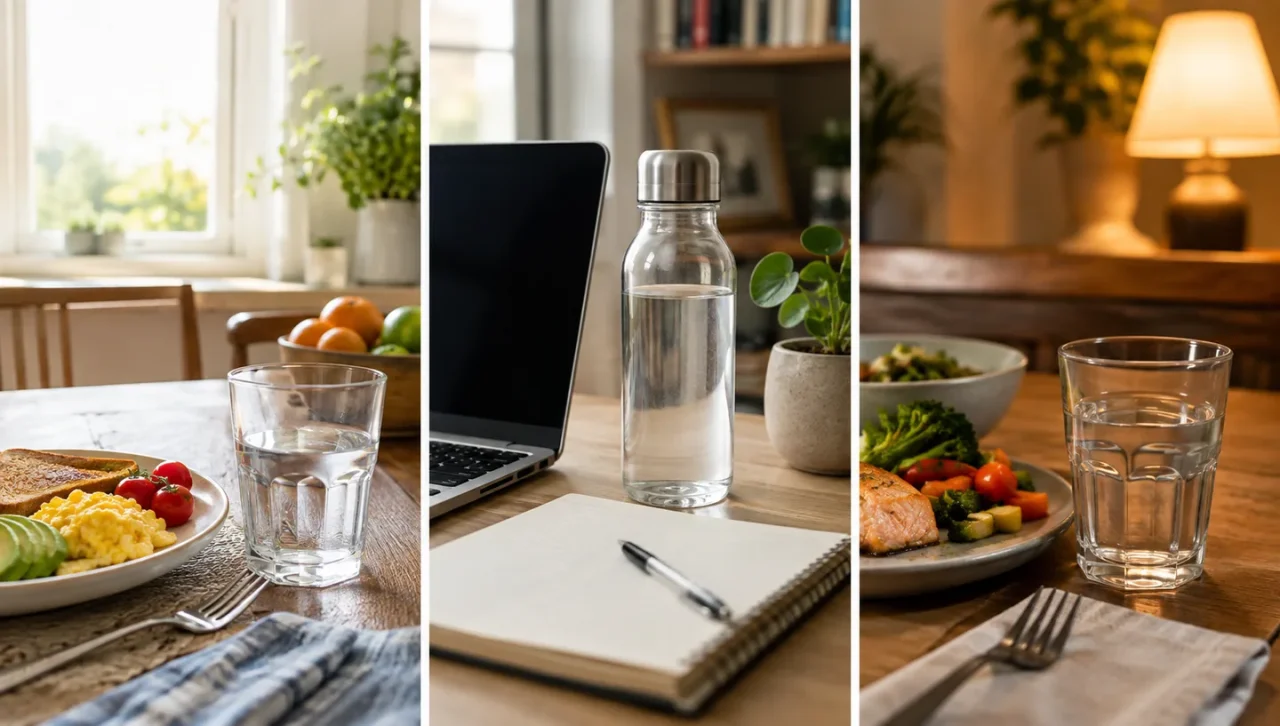
Drink water with meals, after brushing your teeth, or when you return to your desk. Try choosing one of these moments as a reminder and see whether it fits your routine.
2. Make water easy to reach
Keep a clean bottle or glass where you spend time. Choose regular moments to refill it, so you do not leave it empty until evening.
3. Make it enjoyable
Water, other beverages, and water-rich foods such as fruits and vegetables all contribute to your fluid intake. Choose milk or other drinks according to allergies and your dietary needs. CDC: water intake
4. Adjust for changing conditions
Heat, activity, fever, vomiting, or diarrhoea can change fluid needs. CDC: changing conditions If vomiting or diarrhoea causes substantial fluid loss, ask a pharmacist or clinician whether an oral rehydration solution is suitable. A drinking checklist alone is not enough to manage symptoms in an infant, an older person, or someone who is medically vulnerable. NHS: dehydration
5. Look for patterns, not perfection
Pay attention to when you feel thirsty, what you are doing, and how you feel throughout the day. Do not force excessive water intake: more is not always better.
If you have been given fluid advice because of a condition or medication, do not increase the amount on your own. Tell your care team about any symptoms you develop while following a fluid restriction.