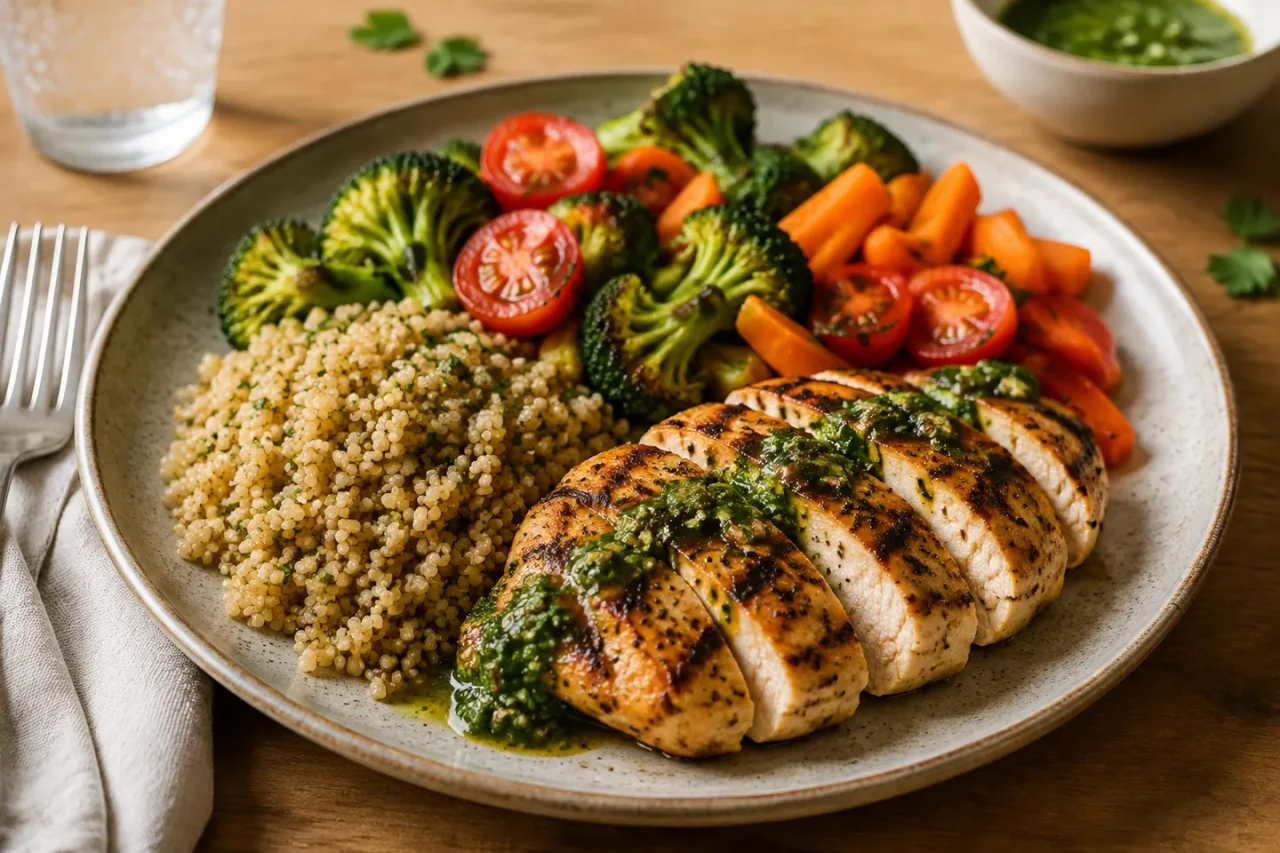
A balanced meal does not have to be perfect, expensive, or identical every day. The broader pattern over time matters more than any single plate.
1. Add a plant food
Choose one or more vegetables or fruits that fit the meal. Fresh, frozen, and canned options can all be useful. Frozen vegetables, washed greens, tomatoes, carrots, or fruit on the side can keep this step simple.
2. Choose a protein source
Options include beans, lentils, tofu, eggs, yogurt, fish, poultry, meat, nuts, or seeds. The right choice depends on preference, culture, budget, allergies, and individual needs.
3. Include a satisfying carbohydrate
Rice, noodles, bread, potatoes, corn, oats, and other grains can provide energy and make a meal more satisfying. Whole-grain versions may add fiber, while a familiar cultural staple can still be part of a varied pattern.
4. Finish with flavor
Sauces, herbs, spices, olive oil, sesame, avocado, cheese, nuts, or seeds can add flavor and texture. Check labels and substitutions whenever allergies are a concern.
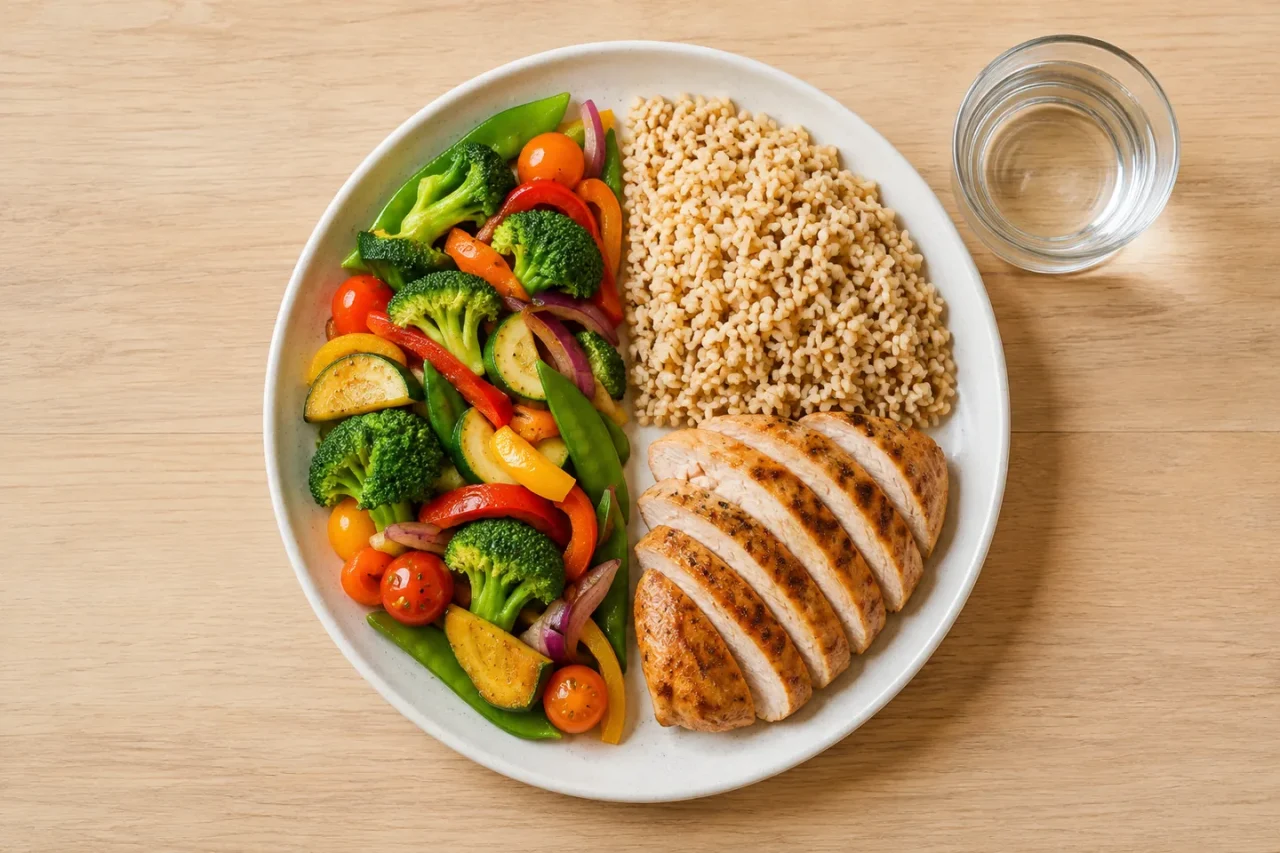
Three quick combinations
- Rice + tofu + frozen vegetables + sesame-lime sauce
- Potatoes + salmon or beans + green salad + yogurt-herb sauce
- Toast + eggs + tomato and cucumber + fruit
Batch-cooked grains, rinsed canned beans, frozen vegetables, washed greens, and one versatile sauce can make weeknight meals much easier.
Takeaway: Aim for a meal that is enjoyable, satisfying, and realistic. One meal does not define your health.
If you manage diabetes, kidney disease, digestive conditions, food allergies, an eating disorder, or another medical concern, individualized guidance may be important.
Reference: WHO — Healthy diet