To calculate daily caffeine, multiply the amount listed for each drink by the amount you actually consume, then add the results. A “cup of coffee” is too vague when sizes and recipes differ. Record the time as well: the same daily total can describe very different drinking habits.
Treat 400 mg as context, not a target
The FDA identifies 400 mg a day as an amount not generally associated with negative effects for most adults. It is not a recommended intake or a personal safety guarantee; sensitivity, health conditions and medicines matter. FDA caffeine guidance
This worksheet is for adults reviewing their routine. Use the advice given to you for pregnancy, breastfeeding, medicines or a medical condition instead of applying a general adult figure. Repeated unpleasant symptoms deserve attention even when your total looks modest.
Read the unit before doing the math
- Per container: a whole bottle labelled 120 mg contributes 120 mg.
- Per 100 mL: 250 mL of a drink labelled 32 mg per 100 mL contributes 32 × 2.5 = 80 mg.
- Per café serving: match the listed size and any extra espresso shots to your order.
- No reliable amount: mark it “unknown” and check the maker’s information. Do not turn a rough coffee average into a precise measurement.
A worked example with three drinks
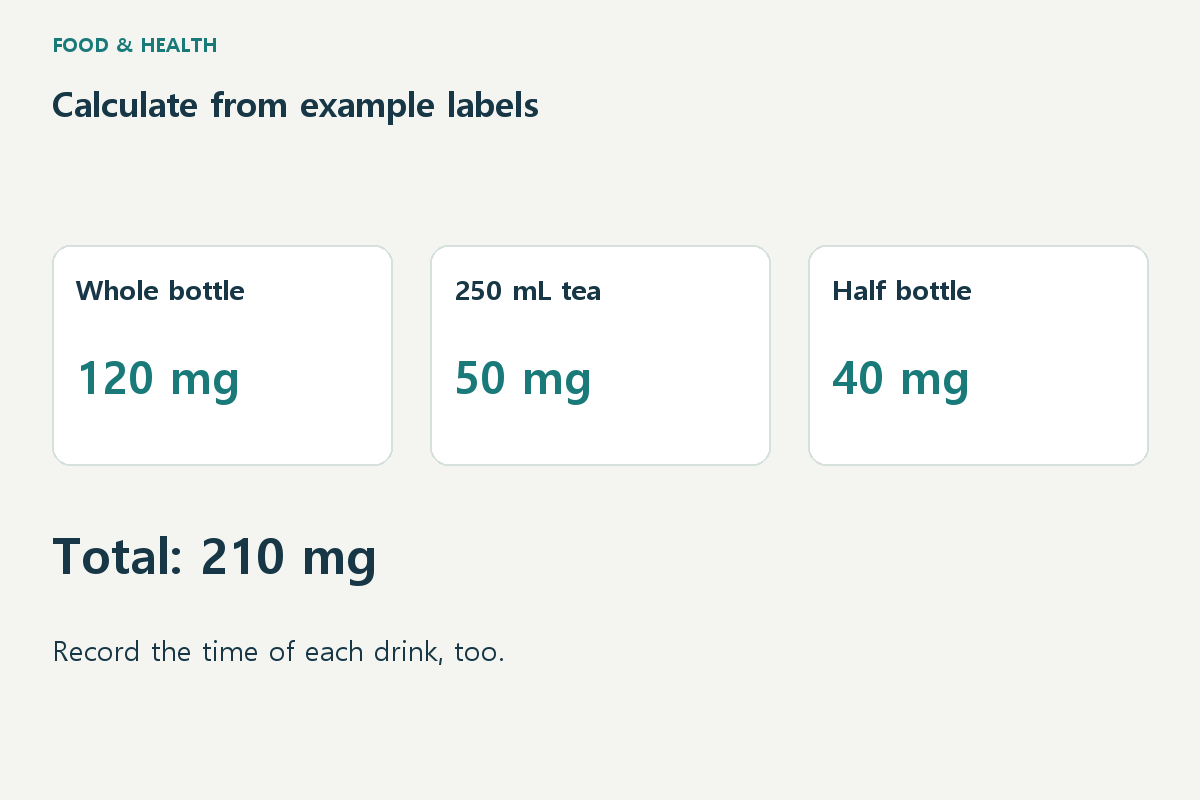
These are invented labels for arithmetic practice, not measurements of real products. Replace them with the information on your own drinks.
| Drink consumed | Calculation | Caffeine |
|---|---|---|
| One coffee bottle | 120 mg per bottle | 120 mg |
| 250 mL tea | 20 mg per 100 mL × 2.5 | 50 mg |
| Half a drink bottle | 80 mg per bottle × 0.5 | 40 mg |
| Daily total | 120 + 50 + 40 | 210 mg |
If you finish one bottle in two sittings, the two entries should still add up to one bottle. If the label calls half a bottle one serving and you drink the whole thing, count two servings. A photograph of the label makes tomorrow’s entry easier and lets you check a number that looks surprising.
Include decaf and the last drink of the day
Decaf does not necessarily mean caffeine-free. Small amounts can remain, so use product information when available. FDA information on decaf
EFSA reports that 100 mg near bedtime may affect sleep in some adults. A daily total alone therefore cannot settle whether your timing works well for you. EFSA caffeine assessment
Write down when you drink, when you go to bed and whether falling asleep was difficult. If you move your afternoon coffee earlier, keep a note of that change rather than altering several habits at once. The record may help you describe a pattern; it cannot diagnose a sleep disorder or establish one universal cut-off time.
Copy this simple log
Time / product and size / label basis / fraction consumed / caffeine in mg / sleep or symptoms. Keep unknown items beside the total, for example “210 mg plus one unverified café drink.” That is more honest and useful than presenting an incomplete sum as exact.
An entry might read: “14:00 / coffee A, 300 mL / 120 mg per bottle / half / 60 mg / note any evening symptoms.” To reduce your intake, identify a late drink or a large portion that would be easiest to change first. The FDA advises gradual reduction for regular users who want to cut back. FDA advice on cutting back
Related guide
How to Keep a Sleep Diary: Separate Time in Bed from Time Asleep
Sources checked: 20 September 2026. Prepared and reviewed with AI assistance using official information. This is an informational guide, not a first-hand product test or site visit.