Vitamin D, B vitamins, omega-3, calcium and magnesium often appear on lists of supplements everyone should take. A more useful starting point is your usual food. Nutrient gaps depend on what you eat and your individual circumstances; a low intake is not the same as a diagnosed deficiency.
This guide helps you review five nutrients or nutrient groups, find practical food sources and decide what to check before buying a supplement. It is not a ranking of population deficiencies or a recommendation to take five pills a day.
Where might nutrient gaps occur in your meals?
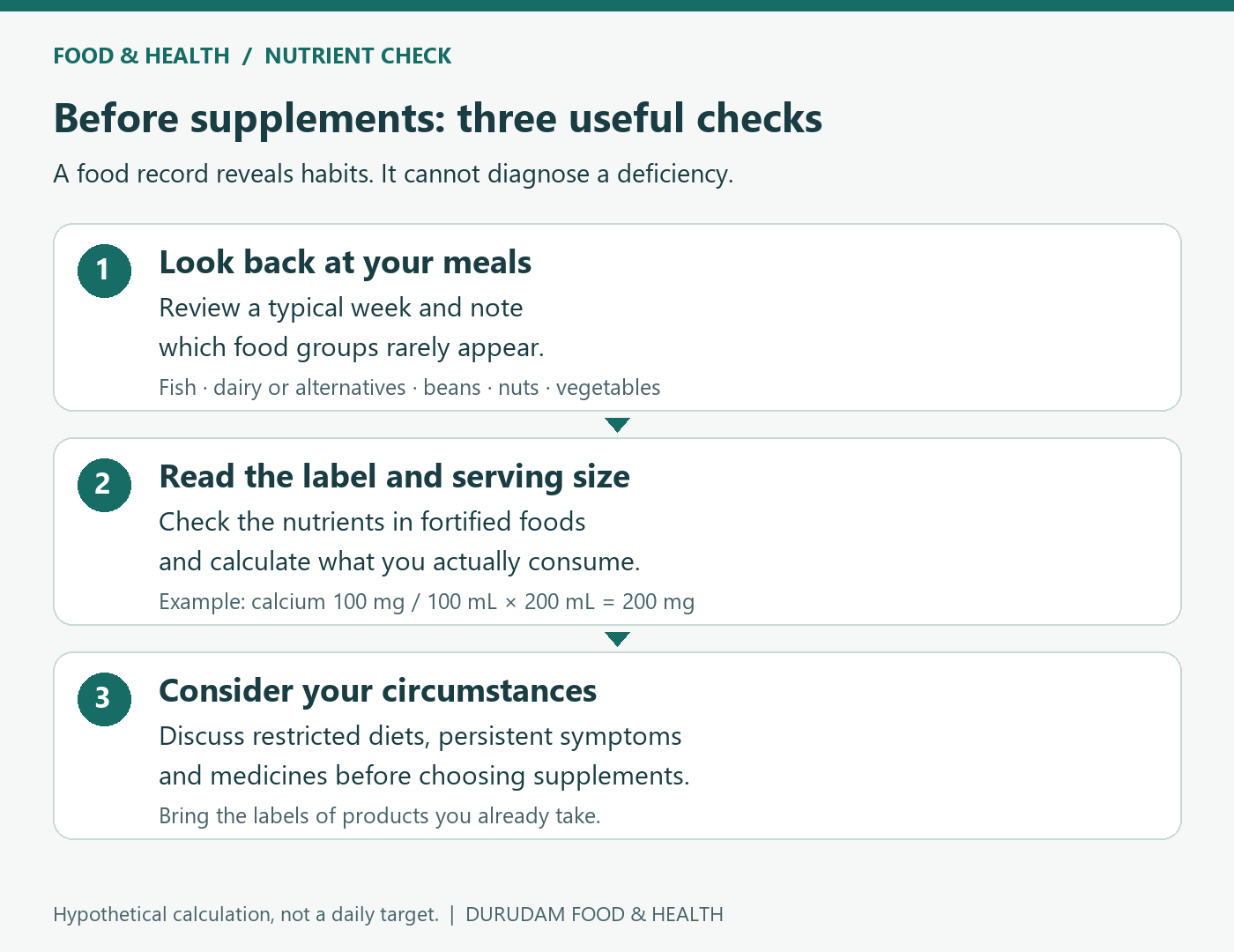
Look back over a typical week. Food photos, receipts or delivery orders can jog your memory. Use the table to spot patterns, not to diagnose yourself. The sections below explain the evidence and limitations behind each entry.
| Nutrient | Food sources to look for | A useful question |
|---|---|---|
| Vitamin D | Salmon, mackerel, foods fortified with vitamin D | Does the label actually list vitamin D? |
| B12, one of the B vitamins | Fish, meat, eggs, dairy, B12-fortified foods | If I avoid animal foods, what supplies my B12? |
| Omega-3 | Oily fish, walnuts, flaxseed | Am I distinguishing plant ALA from EPA and DHA? |
| Calcium | Milk, yogurt, fortified drinks, fish eaten with their bones | Which calcium source do I eat regularly? |
| Magnesium | Beans, nuts, seeds, whole grains, leafy greens | Do these ingredients show up throughout my week? |
1. Vitamin D: limited food sources do not prove deficiency
Vitamin D supports calcium absorption and bone health. Few foods naturally provide much of it; oily fish such as salmon and mackerel are useful sources. Eggs contain some, but one egg is not a complete vitamin D plan. Milk and plant drinks vary in fortification, so check the label. Sunlight through a window does not help your skin make vitamin D, but deliberately exposing unprotected skin to UV is not a sensible substitute for reviewing your intake. NIH vitamin D fact sheet
Working indoors alone does not establish deficiency or justify a high dose. The Endocrine Society’s 2024 guidance advises against routine testing or supplementation above recommended intakes in generally healthy adults under 75 who have no other indication for testing or treatment. Diagnosed deficiency and relevant medical conditions require a separate assessment. Endocrine Society guideline summary
2. B vitamins: look at your diet before reaching for an energy pill
B vitamins are not interchangeable. B12 deserves particular attention if you avoid animal foods: fish, meat, eggs and dairy supply it, while a vegan diet needs a reliable source from fortified foods or supplements. A plant drink is not automatically B12-fortified.
Water-soluble does not mean “never stored.” The body stores substantial amounts of B12, so deficiency symptoms can take years to appear. Extra B12 also does not improve energy or endurance in people whose intake is already adequate. NIH vitamin B12 fact sheet
Avoid stacking high-dose B-vitamin products simply because you feel tired. Long-term high intakes of supplemental B6 can damage nerves. If you take a multivitamin plus a B-complex, check your combined daily B6 intake rather than judging each bottle separately. NIH vitamin B6 safety information
3. Omega-3: walnuts and fish supply different forms
Walnuts and flaxseed mainly provide ALA; fish provides EPA and DHA. ALA is essential, meaning you must obtain it from your diet, but conversion to EPA and DHA is limited. Eating walnuts is therefore not equivalent to getting the same amount of EPA and DHA from fish.
If you rarely eat fish, consider an option you can actually prepare: grilled mackerel, a salmon rice bowl or canned sardines. For people who avoid fish, algal oil can be an option, but the EPA and DHA content needs checking. Ask a pharmacist or clinician before adding an omega-3 supplement if you take an anticoagulant. NIH omega-3 fact sheet
On a label, “1,000 mg fish oil” does not necessarily mean 1,000 mg of EPA plus DHA. Distinguish the total oil weight from the amounts of the specific nutrients you are comparing.
4. Calcium: choose a regular alternative if you skip dairy
Calcium supports bones, teeth, muscles and nerves. Sources include milk and yogurt, fish eaten with their bones, calcium-fortified drinks and tofu made with calcium salts. Tofu and plant drinks vary considerably. If you avoid dairy, identify an alternative you enjoy and check its calcium content. NIH calcium fact sheet
Then match the label to the amount you consume. In a hypothetical example, a drink containing 100 mg of calcium per 100 mL provides 200 mg in a 200 mL glass. Those numbers illustrate the calculation; they are neither a product claim nor a daily target. Our guide to serving sizes and package sizes on Korean nutrition labels explains how to avoid mixing up the two.
5. Magnesium: look for recurring ingredients, not a one-off health meal
Magnesium contributes to muscle and nerve function and many metabolic processes. Beans, nuts, seeds, whole grains and leafy greens provide it. Large supplemental intakes can cause diarrhea or abdominal cramps; magnesium supplements can also interfere with absorption of some antibiotics. NIH magnesium fact sheet
Make the change fit a meal you already eat. Add beans to rice, nuts to yogurt or greens to a familiar soup. An ingredient you can keep buying and preparing is more useful for building a habit than an elaborate meal you make once.
A practical plan for this week
- Review your recent meals. Mark where fish, dairy or fortified alternatives, beans, nuts and vegetables appeared. Start by noticing which groups never showed up.
- Change one specific meal. Replace “eat better” with an action you can shop for, such as choosing a breakfast drink with a stated calcium content.
- Account for foods you exclude. Avoiding animal foods calls for a reliable B12 source; avoiding dairy calls for a deliberate calcium alternative.
- Review before your next grocery trip. If you did not eat what you bought, try a more convenient form. This record identifies habits; it is not a deficiency score.
For example, if coffee replaces breakfast and noodles dominate lunch and dinner, start by planning a breakfast you can manage and one additional dinner component. There is no need to turn that observation into an immediate order for five supplements. For a broader meal framework, see how to build a balanced weeknight plate.
Four checks before buying a supplement
- Purpose: Are you filling an identified dietary gap or treating a diagnosed deficiency? A treatment dose is not a general wellness target.
- Total daily amount: Check whether the label refers to one capsule or the full daily serving. List overlapping ingredients across products you already use.
- Medicines: Show a pharmacist your medication list and the supplement label together. Timing and suitability depend on the particular combination.
- Review point: Write down why you started and what you will reassess. This makes it easier to avoid accumulating products without a clear purpose.
Common questions
Will one multivitamin cover everything?
A multivitamin cannot replace a varied diet. Basic products often contain relatively little calcium and magnesium, so the name on the bottle does not tell you whether it meets a particular need. NIH multivitamin/mineral fact sheet
Should everyone with fatigue get a full panel of nutrient tests?
Fatigue alone does not identify a nutrient deficiency. If it persists, or comes with other symptoms such as tingling, discuss your symptoms, diet and medicines with a clinician to decide which evaluation is appropriate. Do not let buying more supplements postpone that conversation.
Why is there no universal supplement dose in this guide?
Your total daily requirement is different from the amount you might need to add as a supplement. Age, diet, pregnancy, breastfeeding and health conditions affect that decision. This guide is for a general adult food review; seek individual advice during pregnancy or breastfeeding, or when managing a chronic condition.
Sources checked September 20, 2026. Prepared by the editorial team using NIH Office of Dietary Supplements resources and Endocrine Society guidance. This article provides general information, not an individual diagnosis or treatment plan.