To add more fibre, start with one part of a meal you already eat. You do not need a completely new menu or a supplement to begin.
This guide shows adults how to make gradual changes using familiar grains, beans, vegetables and fruit. It is not a constipation treatment plan, a weight-loss promise or an individual intake prescription. “Fibre” and the US spelling “fiber” refer to the same nutrient here.
Look at what you already eat
The US National Institute of Diabetes and Digestive and Kidney Diseases (NIDDK) identifies foods including whole grains, beans, fruit, vegetables and nuts as fibre sources. Its guidance advises increasing fibre gradually and discussing an appropriate intake with a health professional. NIDDK: eating, diet and nutrition
Think back to a recent, fairly typical day. The made-up meals below show the kinds of questions you can ask. There is no score, and the exercise does not label foods as “good” or “bad.”
| Familiar meal | A question to ask |
|---|---|
| Toast and an egg | What kind of bread do I usually choose? |
| Rice and meat | Is there a vegetable I enjoy eating with this? |
| Noodles | Could a familiar vegetable fit into this meal? |
| Packaged snack | Could I have some fruit as part of this snack? |
If your meals already include a range of these foods, do not assume that every meal needs another addition. Look for something missing or a change that would be useful to you.
Choose one change that fits the meal
UK NHS guidance encourages fibre from varied food sources. That means choosing a variety of foods that suit you rather than relying on a large amount of just one. NHS: getting more fibre
We put together the examples below, including rice-based meals from our Korean article, to help with planning. Adapt the ideas to your meals; they do not set the portions you must eat. Check your allergies and any existing dietary restrictions first.
| Usual meal | One possible change | Make it practical |
|---|---|---|
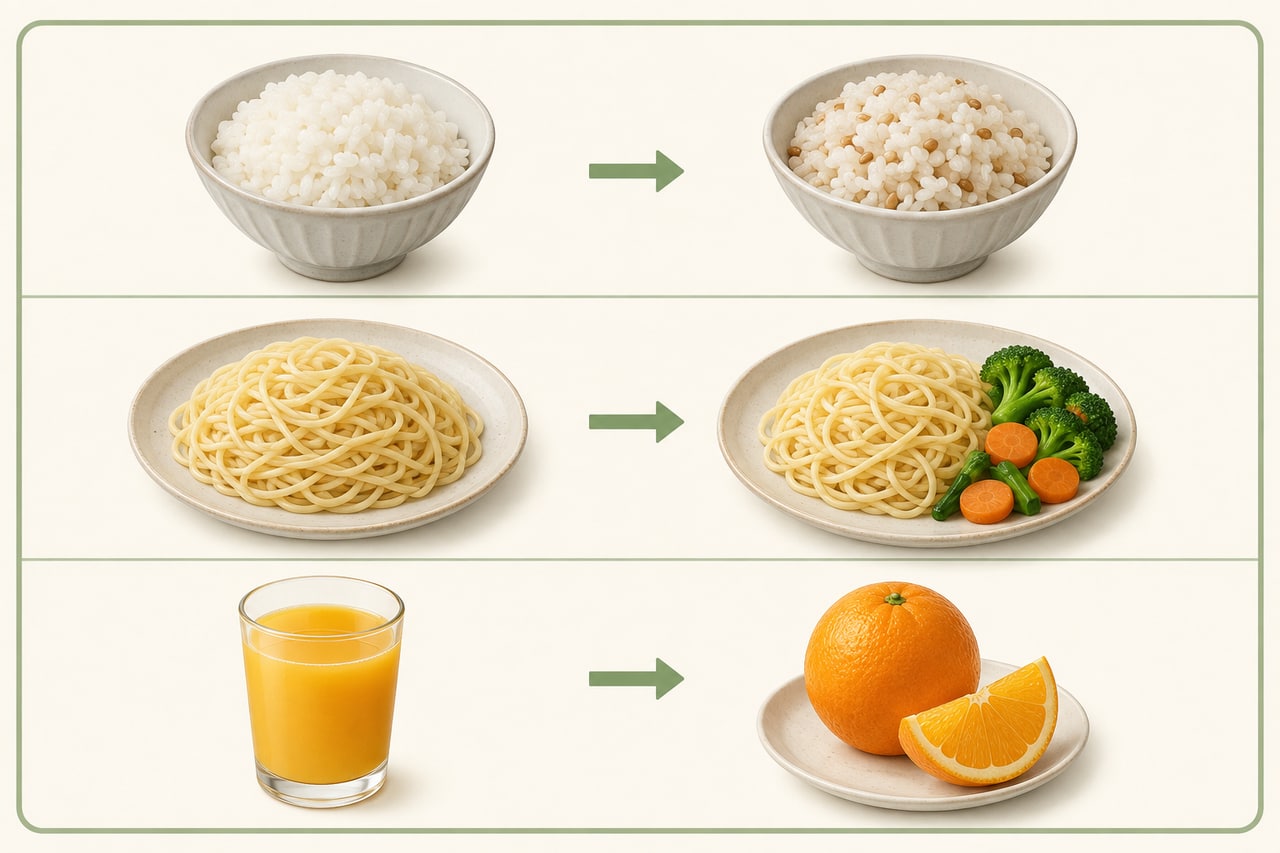
| Rice | Mix in some familiar whole grain | Check the cooking instructions and choose a texture you enjoy |
| Toast | Compare a wholegrain option using its label | Swap the bread and keep the rest of the meal familiar |
| Rice bowl or curry | Include properly cooked beans or a vegetable | Choose a preparation method you can manage that day |
| Noodles | Add a vegetable topping or side | Begin with one type rather than a large shopping list |
| Snack | Replace part of it with fruit | Buy an amount you can actually use |
These are separate choices. You do not need to make them all at once. Use something already at home if it fits the meal and your dietary needs.
Check how your ingredients need to be prepared. Dry raw beans, ready-to-eat cooked beans and frozen vegetables that need heating cannot simply be swapped without adjusting the preparation. Follow the cooking and storage instructions for the product you have.
Adding fibre does not mean replacing all your rice or protein foods with vegetables. Our balanced weeknight plate guide can help you consider the rest of the meal.
Plan two uses before buying an ingredient
Before adding an item to your shopping list, work through four questions:
- Which familiar meal will I eat next?
- What single change will I make to it?
- Where could I use the remaining ingredient in another meal?
- Can I prepare and store the actual product as instructed?
For example, you might plan broccoli as a side for one meal and as part of a rice bowl for another. This example helps you plan shopping and cooking. It does not prescribe what you should eat or represent a measured increase in fibre.
If you choose a convenience food, check whether it is ready to eat or still needs cooking. When comparing costs, consider how much you can use, preparation time, delivery charges, and likely waste. Price per 100 g alone does not tell you whether the purchase fits your routine.
If you already have suitable ingredients at home, try the meal idea before buying another pack or a specialised product.
Change gradually and keep a simple note
NIDDK also notes that fluid needs depend on factors such as health, activity and surroundings; ask a health professional about your own requirements. The same number of litres will not suit every reader. NIDDK: fibre and fluids
A simple note can look like this:
| Date | The one change | Amount and preparation | Any discomfort afterwards |
|---|---|---|---|
| ___ | ___ | ___; raw/cooked or package preparation | ___ |
Changing several things at once makes it harder to describe what happened. If you feel uncomfortable, do not assume pain is something you must get used to, or keep adding more fibre just to reach a target you chose yourself. Discuss persistent symptoms with a clinician or dietitian.
Our everyday hydration guide offers general routine ideas. If you have been told to limit fluids or fibre, that individual advice takes priority over the examples here.
Check what amount and preparation a fibre figure describes
Fibre figures depend on food type, preparation and the portion used. A value for 100 g raw is not automatically comparable with 100 g cooked, and a serving is not necessarily 100 g. NHS: food and portion examples
US and UK daily recommendations should not be treated as personal targets for everyone worldwide. If you need an intake target, discuss the relevant local guidance and your own needs with a professional. Then use figures that match the portions and preparation methods in your plan. More fibre is not automatically the right next step for every person.
Symptoms can matter more than the next food swap
NIDDK advises prompt medical care for constipation with symptoms such as blood in the stool, constant abdominal pain, inability to pass gas, vomiting, fever or unintentional weight loss. Persistent symptoms also need assessment. NIDDK: when to seek care
Do not delay care while completing a diary or testing another meal change. When planning a meal, start with one suitable ingredient and decide how you will use it. You do not automatically need a supplement or a drastic restriction.
Sources checked: 8 September 2026. AI helped with research, drafting and adapting our Korean article into English. US NIDDK and UK NHS material informs the general guidance. The meal options and shopping worksheet are original planning tools, not a nutrient analysis or personalised diet prescription.