When replacing milk, ask two questions: does the alternative suit your digestion, and does it replace the nutrients you expected from milk? Lactose-free dairy, soy drinks and oat drinks are not nutritionally interchangeable by name. Start with protein and calcium in the same volume.

Choose the right starting point
Lactose-free or reduced-lactose dairy can be an option when you need to limit lactose. Tolerance varies between people. NIDDK dietary guidance
Milk allergy involves an immune reaction to milk proteins, rather than difficulty digesting lactose. Lactose-free dairy is still dairy and should not be treated as an alternative for someone with milk allergy. NIDDK explanation
This is an adult shopping guide, not a way to diagnose digestive symptoms or choose an infant-formula replacement. With a diagnosed allergy, the ingredients and allergen statement come before the nutrition comparison.
Four checks on the back of the carton
- Portion: compare per 100 mL or per amount you will drink, not a 190 mL carton against a 250 mL carton.
- Protein: read the grams instead of assuming a milk-style drink supplies a milk-like amount.
- Calcium and vitamin D: check fortification and declared amounts. An unlisted nutrient is “not confirmed,” not automatically zero.
- Sugars and ingredients: use the nutrition panel together with the ingredient list rather than relying on a front-of-pack claim.
The FDA notes that plant-based drinks vary with their ingredients, processing and fortification, and recommends comparing nutrients on the label. FDA milk and plant-based alternatives guidance
Put different carton sizes on equal terms
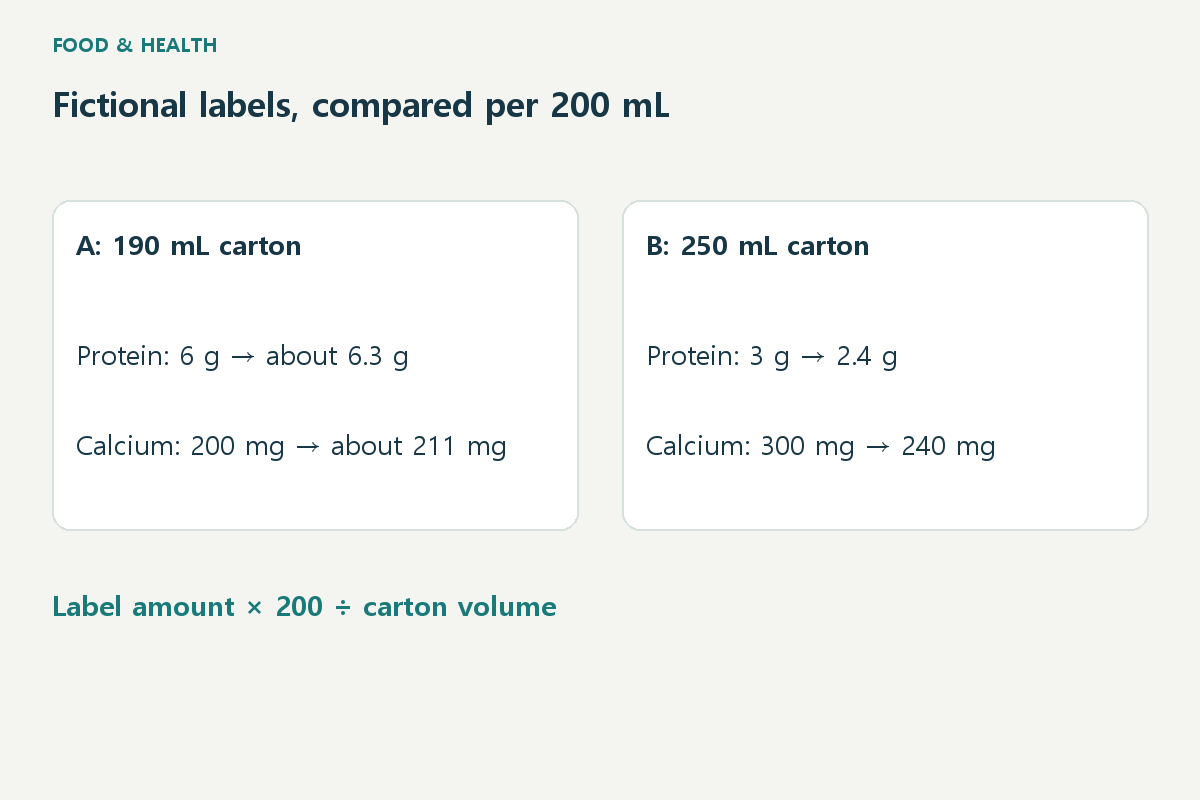
The following labels are fictional. They do not represent average dairy, soy or oat drinks.
| Example product | Whole-carton label | Equivalent per 200 mL |
|---|---|---|
| A: 190 mL | 6 g protein / 200 mg calcium | About 6.3 g / 211 mg |
| B: 250 mL | 3 g protein / 300 mg calcium | 2.4 g / 240 mg |
Use label amount × 200 ÷ carton volume. In this example B provides more calcium per 200 mL, while A provides more protein. Winning one comparison does not settle the other. If you actually finish an entire carton, return to the whole-carton numbers for your final meal calculation.
Decide what the drink needs to do
For a daily breakfast glass replacing dairy milk, protein and calcium are useful starting points. For a small splash in coffee, the amount you use is much smaller, so flavour, tolerance and ingredients may drive the decision. If you want a plant-based diet, compare individual products rather than assuming every plant drink has the same nutritional role.
Suppose your replacement contains less protein than your usual milk. Look at the rest of breakfast: does it include beans, eggs or another food that contributes protein? The useful next step is to review the meal, not automatically buy a supplement. This also keeps a single drink from carrying every nutritional expectation.
A shopping note you can reuse
Write down reason for switching / usual portion / protein / calcium / ingredients and allergens / storage after opening. Follow the carton’s storage instructions rather than applying one shelf-life rule to every drink. If a key nutrient is missing from the label, ask the manufacturer or choose a product with information you can compare. The best choice is the one that fits the job you need it to do.
Related guide
How to Read Serving and Package Sizes on Korean Nutrition Labels
Sources checked: 20 September 2026. Prepared and reviewed with AI assistance using official information. This is an informational guide, not a first-hand product test or site visit.