Choose Greek yogurt by comparing protein per 100 g, the portion you actually eat, sugars and price. Thickness and front-of-pack wording cannot do that comparison for you. A small pot and a large pot may look very different depending on which numbers you read.

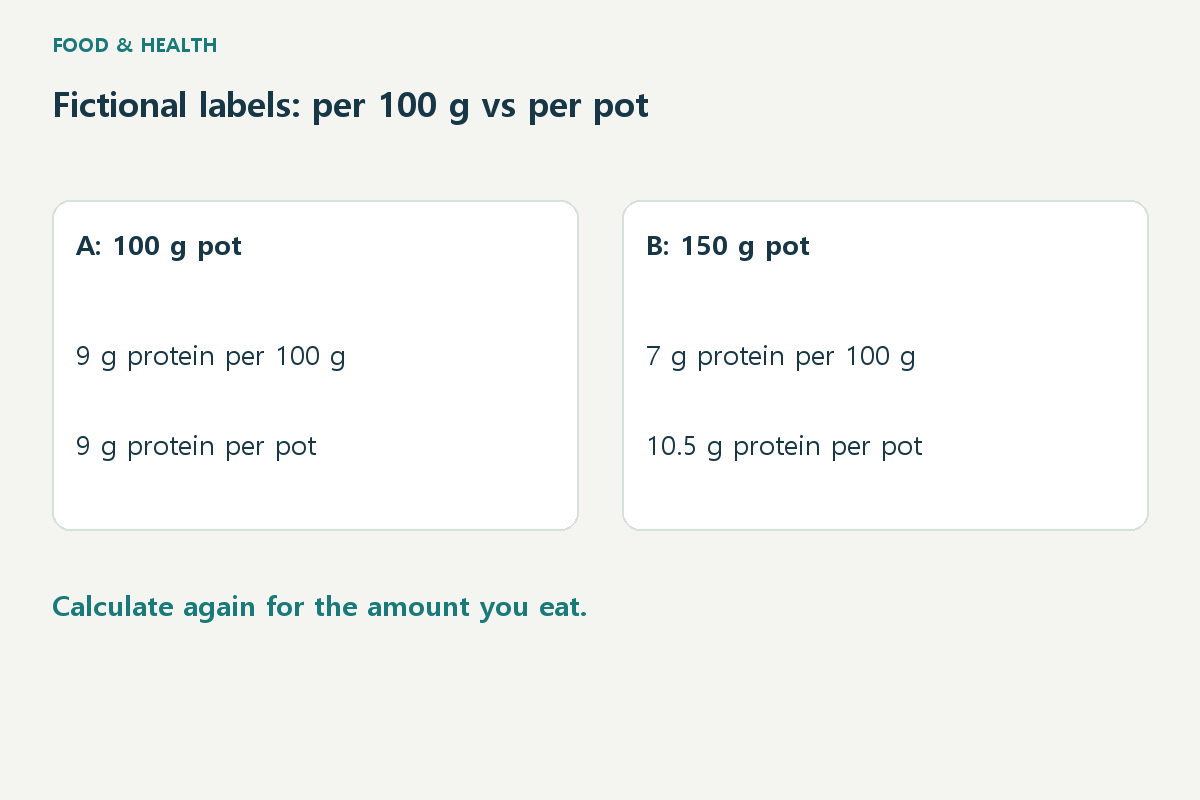
Per 100 g and per pot answer different questions
Per 100 g helps compare equal weights. Per pot tells you what you get if you finish that container. A product with more protein per 100 g can still provide less protein in a smaller pot. Write down the basis of each number before deciding which is better for breakfast.
Work through two fictional labels
These are invented products for arithmetic practice, not a ranking of real brands or a definition of how much protein Greek yogurt must contain. Prices are example Korean-won prices.
| Comparison | A | B |
|---|---|---|
| Pot size and price | 100 g / ₩1,800 | 150 g / ₩2,400 |
| Protein per 100 g | 9 g | 7 g |
| Protein per pot | 9 g | 10.5 g |
| Sugars per 100 g | 4 g | 5 g |
| Sugars per pot | 4 g | 7.5 g |
| Cost per 10 g protein | About ₩2,000 | About ₩2,286 |
B provides 7 × 150 ÷ 100 = 10.5 g protein per pot. For protein value, use pot price ÷ protein per pot × 10. A costs less per 10 g protein, but a whole pot of B provides more protein. Neither result is contradictory; they answer different questions.
Total sugars are not the same as added sugar
The FDA explains that total sugars include naturally occurring sugars, such as those in milk, as well as added sugars. On US labels, “Total Sugars” and “Added Sugars” are different entries. FDA added-sugars guidance
On a Korean label, do not infer the exact amount of added sugar from the single total-sugars figure. Read the ingredients too. Check whether fruit, syrup or a separate topping is involved, and do not let the word “plain” end your ingredient check. A finished bowl with toppings is a different comparison from the yogurt alone.
Include the way you actually serve it
If you usually add cereal or honey, comparing only the yogurt’s sugars leaves part of your bowl out of the calculation. Check whether the nutrition panel includes a packaged topping or describes the yogurt separately. Where the components have separate labels, record the amount of topping you use rather than assuming you finish it all.
The same practical thinking applies to price. A large tub may be cheaper per 100 g, but that saving changes if some is discarded. For an unfamiliar product, a small pot can help you decide whether the taste and portion work for you before buying a larger tub. Follow the product’s instructions for storage after opening.
Use your purpose to make the final choice
- Breakfast: compare protein in your usual portion and consider the foods you eat alongside it. One pot is not automatically a complete meal.
- Protein value: use comparable prices and remember that the calculation leaves out taste, tolerance and preferred portion size.
- Sweetness: check ingredients and toppings, then look at what actually goes into the bowl.
- Milk-related restrictions: “Greek” does not establish that a product is lactose-free or free of milk protein. Check the product and your own requirements.
A useful shopping order is size → protein → sugars and ingredients → actual portion → price. The point is to make a choice that fits your routine, not to award every yogurt a universal health score.
Related guide
How to Read Serving and Package Sizes on Korean Nutrition Labels
Sources checked: 20 September 2026. Prepared and reviewed with AI assistance using official information. This is an informational guide, not a first-hand product test or site visit.