Start by finding a tool that fits between your teeth without force. Different gaps may need different tools, and you should never push an interdental brush into a space where it will not fit.
You may need different tools or brush sizes in different areas. Check the fit and learn how to use the tool before comparing multipack prices.
The tools reach between teeth in different ways
Floss curves along a tooth’s surface, while an interdental brush uses small bristles to clean a gap it fits into. UK NHS guidance describes both and advises asking a dentist or dental hygienist about the appropriate choice. Cleaning is about removing plaque, not just dislodging visible food. NHS: keeping teeth clean
Even if food rarely gets stuck between your teeth, the area still needs an appropriate cleaning method. The size of the gap and how you use the tool matter.
Check the fit in each gap
You may need different brush sizes for different gaps. Never force a brush in, and ask your dental team to show you how to use it. Collingwood Surgery, NHS practice
We put together the table below to help you describe what feels difficult. It does not diagnose problems with your teeth or gums.
| Situation | What to ask about | Avoid |
|---|---|---|
| Brush will not enter | Floss or another suitable approach? | Forcing the brush into the gap |
| Different gaps fit differently | Which size for each? | One size everywhere |
| Direction feels difficult | Ask someone to show you the angle and movement | Repeatedly poking the gums |
| Pain or repeated bleeding | Technique and gum assessment | Extra force |
If you have instructions for a treated area, a bridge, an implant or orthodontic appliances, follow those individual directions rather than substituting this general table.
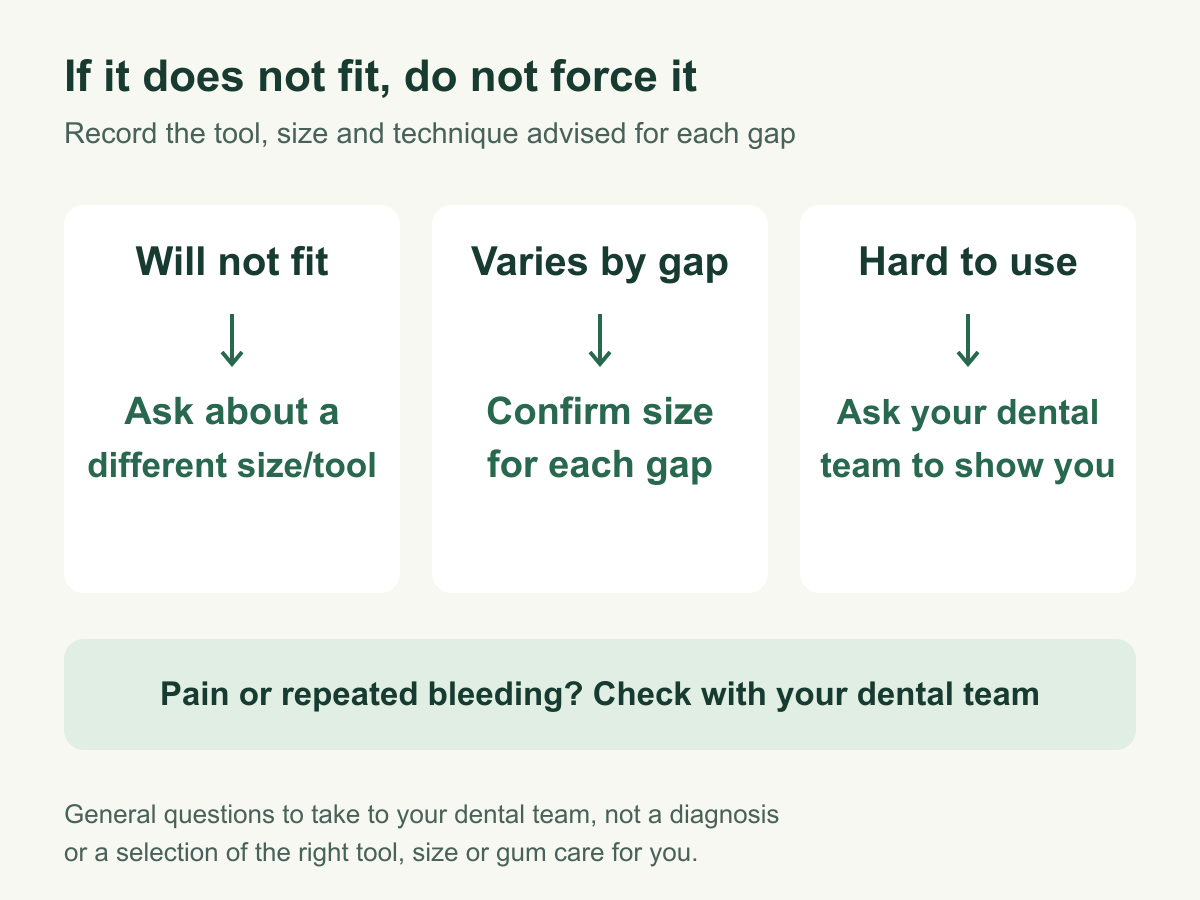
Note which tool to use in each gap
Write down the exact product name and size beside a simple description of where you use it. A private note or a photo of the product packaging can help you replace the right item later.
The entries below are fictional examples, not recommendations for those teeth:
| Location | Tool or current decision | Question to resolve |
|---|---|---|
| Lower front teeth | Floss | Check the curved movement along each tooth surface |
| Upper right back teeth | Product and size recorded after advice | Ask for a demonstration of the grip |
| A gap where the brush will not enter | Undecided | Ask which method to use; do not force the brush |
You do not need to memorise tooth numbers to start the conversation. Point out the area with a mirror and confirm the location with your dental professional. Keep mouth photographs and personal health notes private; there is no need to post them publicly to compare products.
Ask for a demonstration if the written instructions are unclear
NHS flossing guidance describes gently curving the floss around the side of a tooth in a C shape and moving it along the surface. Avoid snapping it into the gum. NHS: flossing technique
Move the brush gently without forcing it into the gap. Ask for help if you find the technique difficult. Collingwood Surgery
Four useful questions are:
- Which tool should I use in this particular area?
- Which size should I use in each space where a brush is suitable?
- Can you check my angle and how much force I am using?
- What should I do about bleeding at this specific site?
Once you know which product to use, make sure you feel confident using it as shown.
Make it part of your usual brushing routine
NHS guidance advises daily cleaning between teeth before brushing; the Collingwood guidance also places interdental brushing before toothbrushing. This does not mean everyone needs to use both tools in every gap. NHS: gum care, Collingwood Surgery: daily routine
For example, keep the appropriate tools ready for your evening brushing routine. If you miss a day, think about what got in the way. Do not try to make up for it by using more force next time.
Follow the exact product’s cleaning, drying, storage and replacement instructions. There is no single “replace every X days” rule that applies to every type of tool.
Confirm the fit before buying a multipack
If your current tool fits and you can use it comfortably as instructed, you may not need to replace it because of an advertisement. Before buying a large quantity of something new, confirm the type, size, and technique.
| Buying detail | What to check |
|---|---|
| Product | Exact name and version |
| Size | The option you were shown, where applicable |
| Quantity | What the pack actually contains |
| Storage | How the individual tools can be kept as instructed |
| Instructions | Official use, care and replacement information |
A handle may look easy to use in a product photo, but that does not tell you how well it will work in your mouth. This article does not compare products for treatment effectiveness.
Get bleeding or pain checked
NHS guidance advises seeing a dentist for bleeding or painful, swollen gums. Very painful and swollen gums or loosening teeth warrant an urgent dental appointment. NHS: symptoms and dental assessment
Use the dental service available where you live. Do not automatically label bleeding as harmless because it happened when you first tried a tool. Your dental team may need to check both the cause and your technique.
For now, note the tool you have and where you find it difficult to use, then ask for help with that area. The same notes can help you choose a replacement later.
Find related everyday guidance in our Wellness & Recovery collection.
Sources checked: 8 September 2026. AI helped with research, drafting and adapting our Korean article into English. UK NHS and NHS-hosted patient guidance informs the general discussion; country-specific fees and coverage are outside its scope. The worksheet is an original editorial aid, not a dental examination or personal care prescription.