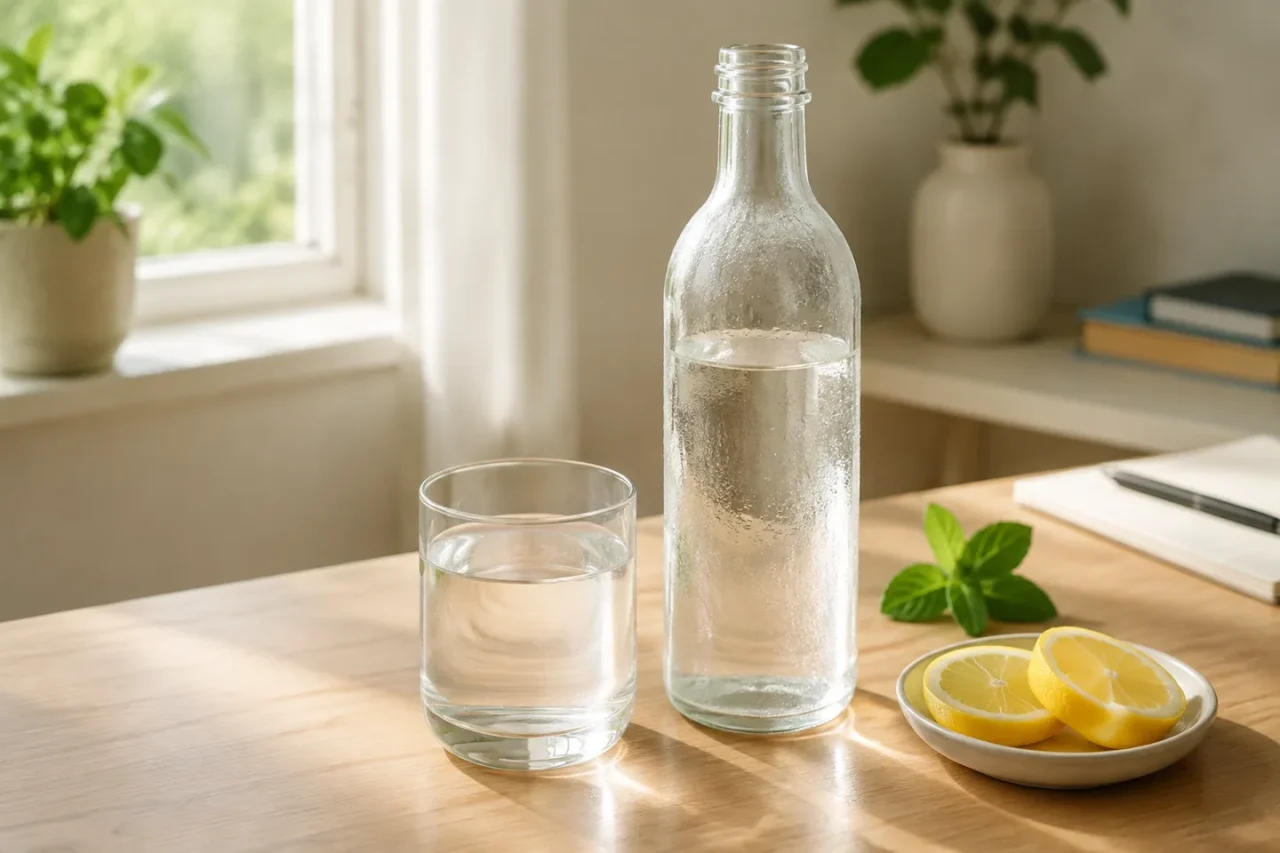
There is no single water target that suits everyone. Fluid needs vary with age, body size, activity, climate, pregnancy or breastfeeding, illness, medications, and diet.
1. Pair water with an existing habit
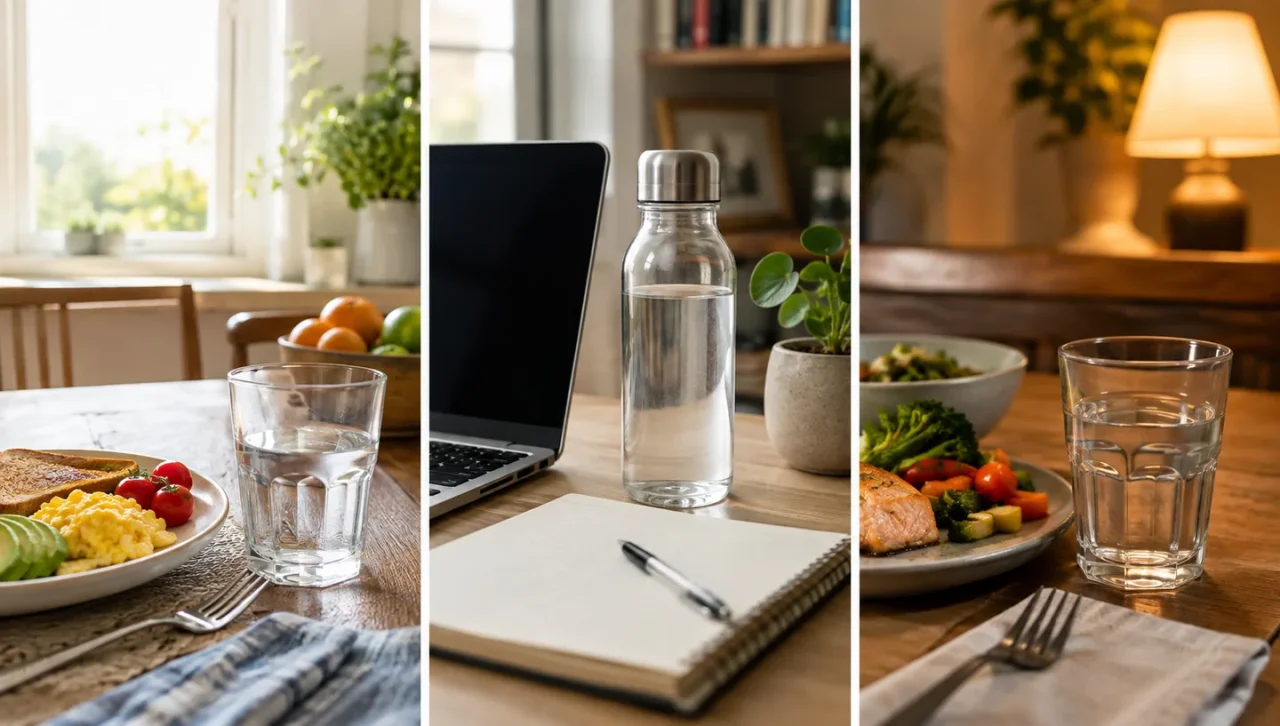
Drink water with meals, after brushing your teeth, or when you return to your desk. A regular cue is often easier to maintain than relying on memory.
2. Make water easy to reach
Keep a clean bottle or glass where you spend time. Refill it at predictable points in the day rather than waiting until the end of the day.
3. Make it enjoyable
Plain water is a simple default, while unsweetened tea, milk where suitable, soups, fruits, and vegetables can also contribute fluid. Add citrus, cucumber, or herbs if that makes water more appealing.
4. Adjust for changing conditions
You may need more fluid during hot weather, prolonged activity, fever, vomiting, or diarrhea. These situations can also require electrolyte or medical guidance, particularly for children, older adults, or people with health conditions.
5. Look for patterns, not perfection
Notice thirst, routines, activity, and how you feel across the day. Do not force excessive water intake: more is not always better.
People with kidney, heart, or liver conditions—or anyone prescribed a fluid restriction—should follow individualized clinical advice.